
Jerusalem in Brief (No. 15)
Feature: the history of Absalom's Pillar through a 19th-century photo. Also: why is a North American plant called Jerusalem artichoke? Plus a link to my recent lecture and upcoming events

If you find this newsletter valuable, consider upgrading to a paid subscription and receive unique Jerusalem-related benefits.
Jerusalem Visualized
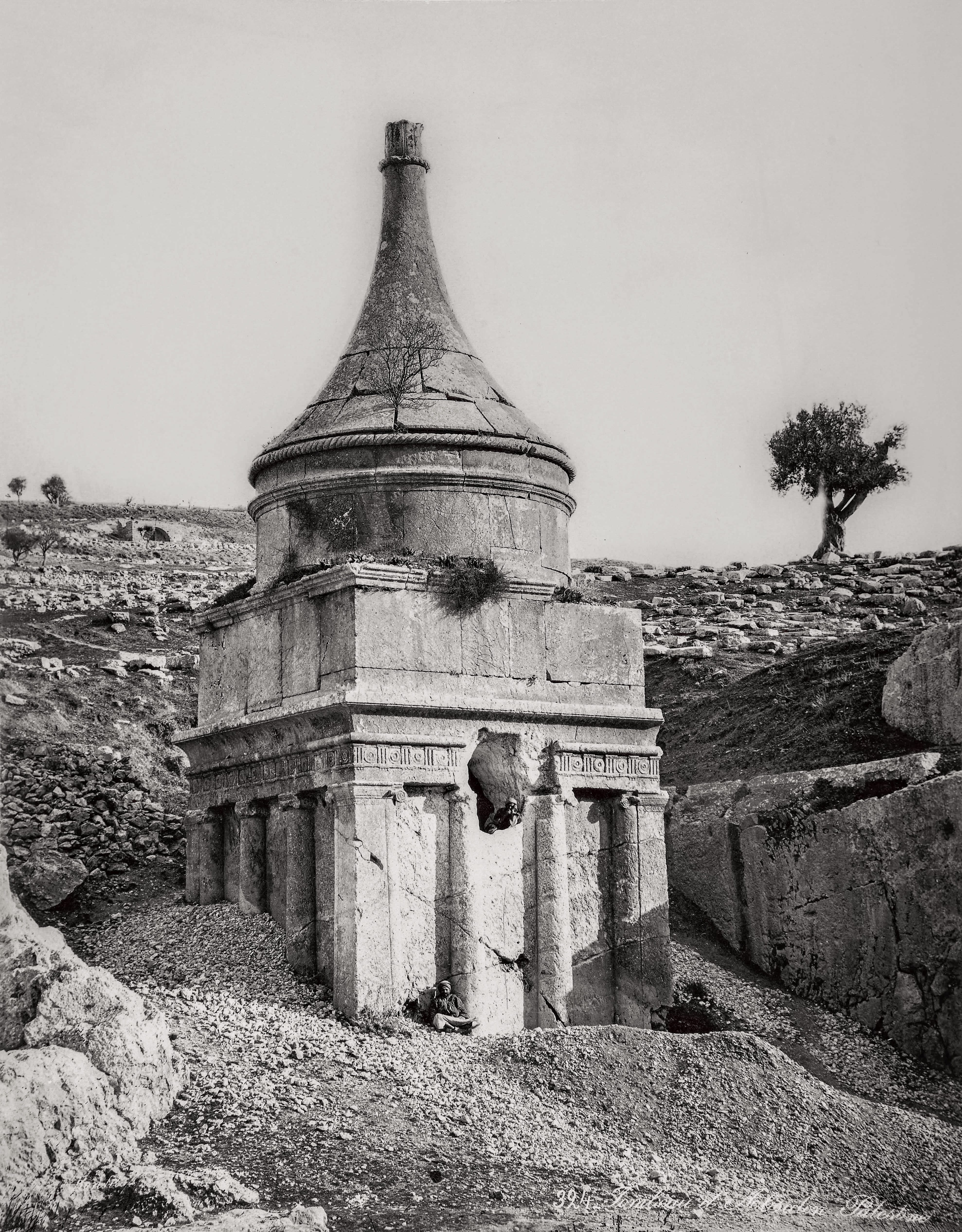
This photo shows a tomb monument at the bottom of the Kidron Valley sometime between 1867-1885. Known locally in Arabic as Tantur Far’un (“Pharaoh’s Peak”), its more popular name is Absalom’s Pillar or the Tomb of Absalom. This comes from II Samuel 18:18, where we are told that King David’s son Absalom set up a memorial for himself in the King’s Valley prior to his death during an attempted coup against his father.
If you have ever visited Absalom’s Pillar, you will have already noticed a jarring difference between this photo and your own experience standing in front of the monument: there is a large pile of stones and rubble covering half of its base that today has been cleared away. It accumulated as a result of a medieval Jewish practice where passersby would throw rocks at the monument, cursing the memory of David’s rebellious son. This was observed by many visitors to Jerusalem during the 19th century and noted in their travelogues, though the practice probably began much earlier.
“Arriving at the bottom of the mount near the valley of the Kidron, we turned to the left into a path leading to the Valley of Jehoshaphat, and went as far as Absalom’s tomb ; the base of which is now buried to some depth in a mass of stones, which the Jews have been in the habit of throwing at it from time immemorial. Every Jew who passes by throws a stone and spits at the tomb to show horror at the disobedience and rebellious conduct of Absalom.” (Blyden 1873:168)
The removal of the stone pile is one of many similar examples in Jerusalem where physical evidence attesting to a longstanding belief, tradition, or practice has been obscured. Only the name remains, tying the monument to the memory of David’s rebellious son.
Absalom’s tomb in Jerusalem was mentioned in the first century CE by both the historian Josephus and in the Copper Scroll, one of the Dead Sea Scrolls (Zias and Puech 2005:163-164). However, the first explicit connection between Absalom’s memorial mentioned in II Samuel and the monument in the Kidron Valley seems to have been made sometime in the 12th century CE. It is often associated with the Jewish traveler Benjamin of Tudela (1130-1175), who wrote:
“The gate of Jehoshaphat leads to the valley of Jehoshaphat, which is the gathering-place of nations’. Here is the pillar called Absalom’s Hand, and the sepulchre of King Uzziah.” (Adler 1907:23)
The lower half of the monument is a monolith that was impressively cut from the surrounding limestone bedrock (visible at the left and right above) and then decorated. The upper half is built of stone blocks, and its ornate features are an interesting mishmash of Hellenistic, Roman, and Egyptian-style architecture. Most scholars date this monument sometime in the first century CE, about a thousand years after the time of Absalom (Kloner and Zissu 2007:243).
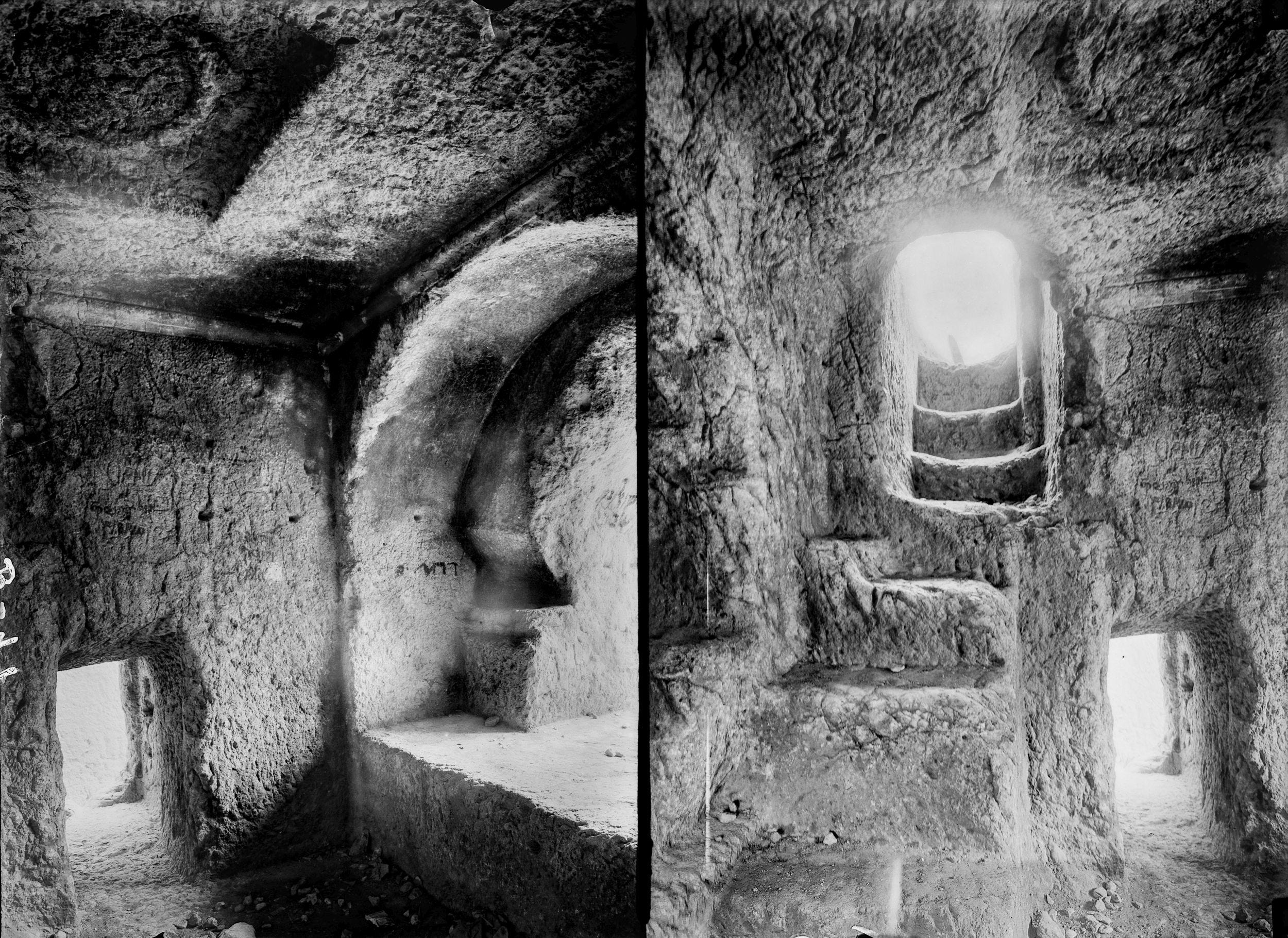
To whom did this monument belong? It is often associated with some elite family in Jerusalem, perhaps priestly or Sadducean. Gabriel Barkay suggested that the tomb belonged to Herod Agrippa I, the grandson of Herod the Great (Barkay 2013). In support, he pointed to similarities between Absalom’s Pillar and the tomb of Herod found at Herodium.
Greek graffiti that was later etched into the southern wall of Absalom’s Pillar attests to a new tradition that developed during the Byzantine Period. During this time, the monument apparently became associated with the burial places of Zachariah the father of John the Baptist and Simeon, a devout Jerusalemite (Zias and Puech 2005). These men are both mentioned in the first two chapters of Luke’s gospel.
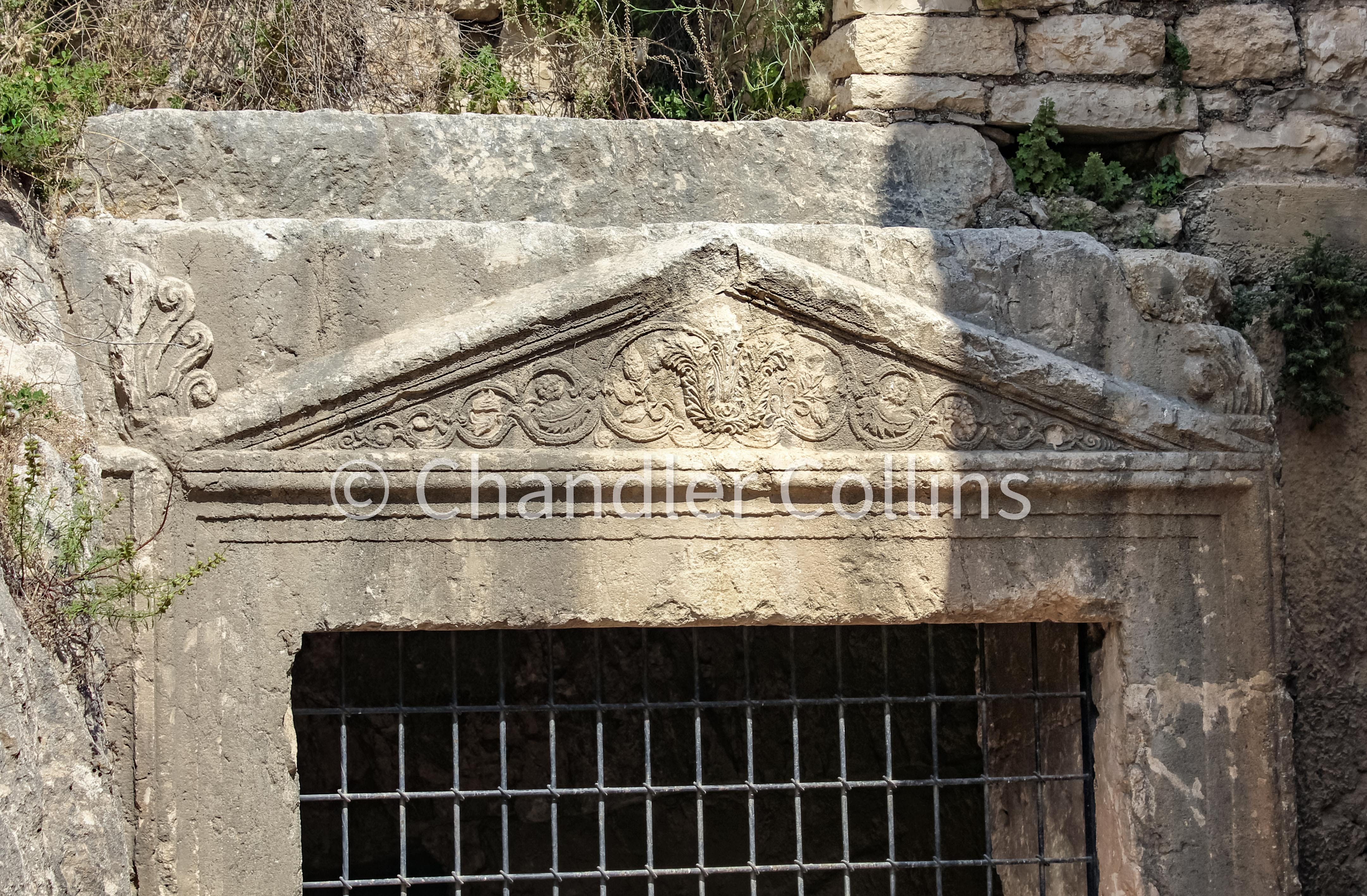
The perspective of the photo at the beginning of this post features Absalom’s Pillar exclusively. It (and many other similar photos) might be taken to imply that the monument stands alone. But this is not the case. Absalom’s Pillar is part of a vast necropolis that has been accruing on the east side of Jerusalem since at least the third millennium BCE. Several other conspicuous rock monuments in this area include the so-called Tombs of: Zechariah, the Sons of Hezir, Pharaoh’s Daughter, and the Royal Steward, among others. These burial monuments have marked this landscape for millennia as an enduring memorial to Jerusalem’s former elite.
The physical context of the necropolis, which is still quite visible today, calls to mind Isaiah 22:16, where the prophet criticized Shebna, a high official in Judah’s administration. The text mentions the prominent location of his tomb in Jerusalem:
“What have you here, and whom have you here,
That you have hewn out a tomb for yourself here?—
O you who have hewn your tomb on high;
O you who have hollowed out for yourself an abode in the cliff!” (JPS)
Jesus’ rebuke as recorded in Matthew 23:27-28 also seems to draw on the visibility of tombs on Jerusalem’s landscape (Wright 2017:242-246):
“Woe to you, scribes and Pharisees, hypocrites! For you are like whitewashed tombs, which on the outside look beautiful, but inside they are full of the bones of the dead and of all kinds of filth. So you also on the outside look righteous to others, but inside you are full of hypocrisy and lawlessness.” (NRSV)
Notes & Quotes
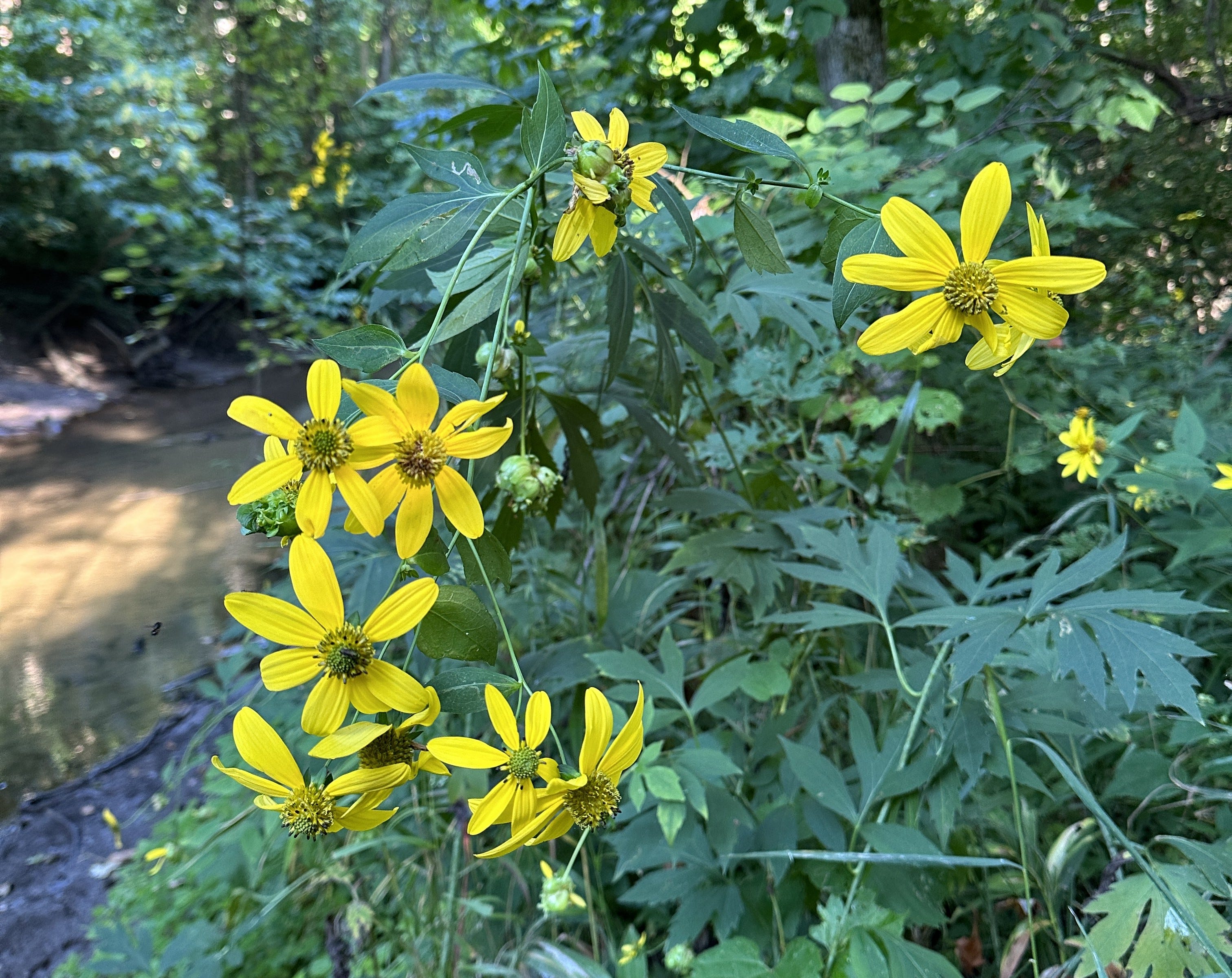
Jerusalem artichoke (or sunchoke) is a native plant in North America. It produces a beautiful yellow flower in late summer that looks similar to a sunflower (the two are actually closely related). The plant stores its energy underground in starchy, edible tubers that can be dug up and cooked like potatoes or root vegetables. Perhaps you may have seen them for sale at a local farmer’s market. Since learning about this plant, I have naturally wondered how it came to be commonly termed “Jerusalem artichoke.”
Sean Sherman, chef of the Indigenous restaurant Owamni in Minneapolis and James Beard Award-winning author, provides a possible answer. He writes in his cookbook, The Sioux Chef’s Indigenous Kitchen:
“Sunchokes are a quirky New World root that Native Americans introduced to the Spanish explorers who brought them to Europe, where they have been cultivated and celebrated ever since. They are sometimes called Jerusalem artichokes, but they are neither from Jerusalem nor are they artichokes. One explanation for the name is that the Puritans believed they’d landed in “New Jerusalem,” and, finding the roots in great abundance, named them for the artichokes they believed grew in Jerusalem.” (2017:45)
Acclaimed forager Samuel Thayer provides another possible origin for the name that is more linguistically focused. In his book Nature’s Garden, he notes:
“…the ‘jerusalem’ part of jerusalem-artichoke does not even appear to be geographic in origin; it is believed to be a corruption of the Spanish or Italian word for sunflower (girasol or girasole).” (2010:415)
In Case you Missed It
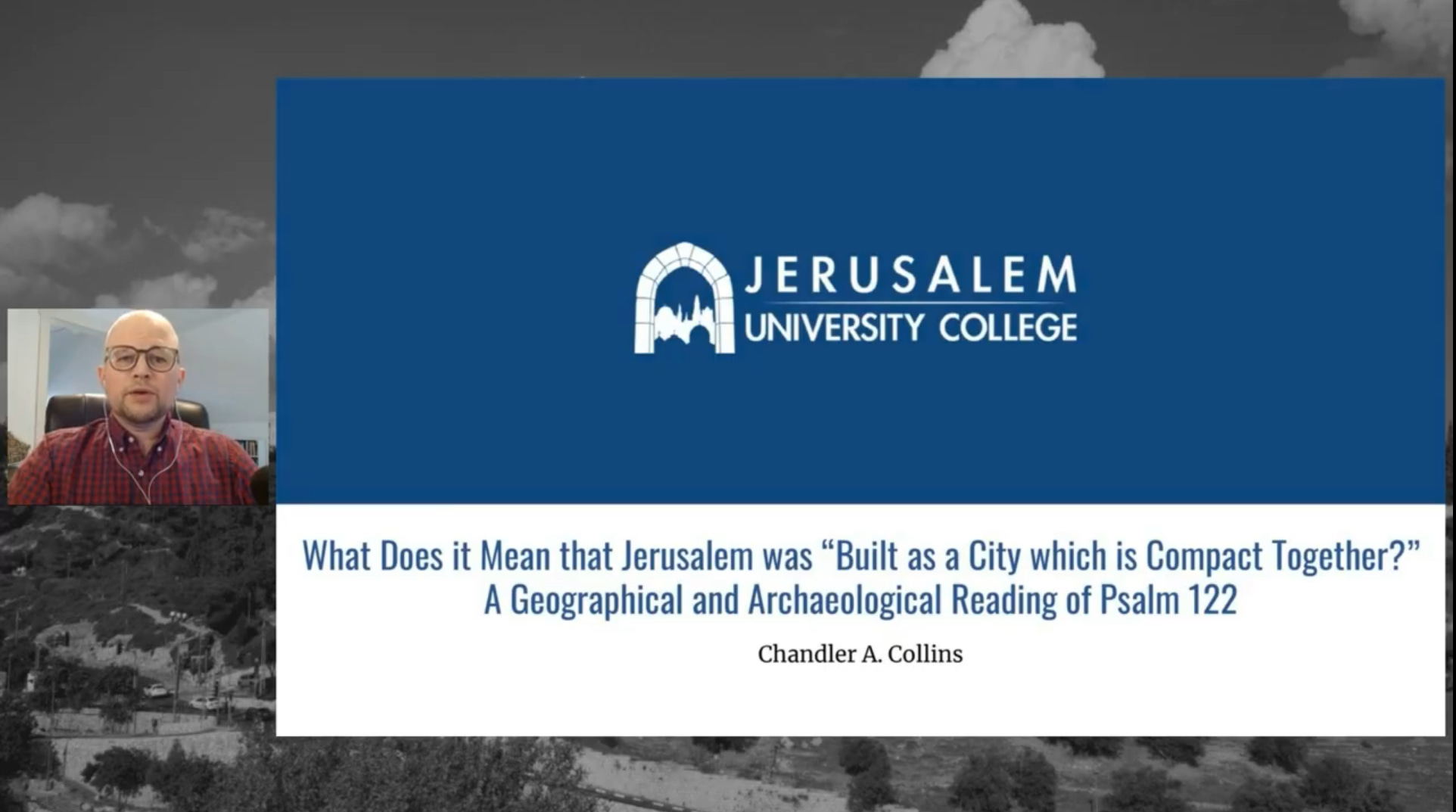
On January 10, I lectured and participated in a roundtable discussion as part of Jerusalem University College’s annual online seminar. My topic was Psalm 122:3: what does it mean that Jerusalem was “built as a city which is compact together?”
If you weren’t able to make the event, free recordings of my lecture and the roundtable discussion are available:
Upcoming Events
25 February 10:00 AM ET/17:00 JT: Christie Pavey will lecture at the Albright Institute on the following topic: “Willibald Goes to Jerusalem: A Trip Through the City Then and Now.”
The lecture is free in person and online. More details can be found here.
4 March 10:00 AM ET/17:00 JT: Luca Brancazi will lecture at the Albright Institute on the following topic: “Current Research on the Holy Sepulchre and Faunal Remains.”
The lecture is free in person and online. More details can be found here.
11-12 March: A research workshop focused on the results of new excavations in the Church of the Holy Sepulcher will be held at the Yad Ben Zvi Institute. It is titled “1700 Years Since Empress Helena’s Visit to Jerusalem.” In person only. Details and registration here.
Updates for Paid Supporters
March 17 (8:00-9:30pm ET) is our next quarterly livestream for paid supporters.
During these events, I discuss excavations, publications, pop media articles, and relevant developments for historical Jerusalem. I also share resources and occasionally present original research. Participants have the opportunity to ask questions.
Paid subscribers also get access to the archive of previous livestreams, which is currently about 16 hours of watch time.
This material was 100% human composed. We do not use AI at any stage of research or writing.
Enjoy this post?
Show your appreciation by leaving a tip as low as the price of a cup of coffee. Less than 1% of readers do this, and it makes an enormous difference.
Follow Approaching Jerusalem
View the newsletter archive and follow Approaching Jerusalem on social media for archaeological stories, upcoming lectures, and other Jerusalem-related news, resources, and analysis.