
Jerusalem in Brief (No. 14)
Happy New Year, plus a reflection on the passing of Jerusalem scholar Gabriel Barkay

If you find this newsletter valuable, consider upgrading to a paid subscription and receive unique Jerusalem-related benefits.
Happy (belated) New Year
Whether you are a longtime subscriber or came upon this newsletter recently, I’m grateful to have you as a reader. I try to focus on two major things here: a deeper appreciation of Jerusalem’s history and reflecting on how we think (and should think) about the city.
These goals affect my writing in two major ways. First, I try my best to keep up with the newest historical evidence and latest published ideas about Jerusalem. I sort through hundreds of scholarly journals and publishing house websites each annual quarter and create bulleted lists of every new relevant scholarly publication I can find (see the Jerusalem Tracker archive). I also list new media, such as podcasts, video lectures, blogs, and pop media stories about historical Jerusalem.
In longer-form pieces, I try to avoid clickbait material and fixation on the spectacle of Jerusalem’s archaeological history (though certainly entertaining), and focus instead on evidence and analysis. Last year, I wrote several long-form posts that explore archaeological, biblical, and geographical aspects of Jerusalem’s history:
the recently discovered “Siloam Dam”
the location of the biblical Mishneh
major rock scarps in Jerusalem
The second major part of this newsletter’s approach involves paying attention to the expectations and ideologies that inform how we engage with Jerusalem’s antiquity. This is obviously relevant to the handling of antiquities, including their excavation, display, neglect, and more. Last year I explored some tensions between historical interpretations promoted by the City of David Park and results of ongoing excavations at Birket el-Hamra (near the ancient Pool of Siloam). I also reflected on the ways that some sites in Jerusalem may not fit well with visitor expectations.
I also enjoy writing about artistic visualizations of Jerusalem, which always reveal something about the creator’s point of view. Last year, we looked at Jerusalem’s depiction both on the Byzantine-era Madaba Map and on the first “scientific” map of the city created in 1865. Both examples provide real historical information about Jerusalem while also revealing something its makers believed, valued, or idealized about the city. Even historical photographs of Jerusalem, though they show objective reality, suggest something about the point of view of the photographer or prevailing interpretations influencing the choice to capture certain locations and features over others.
I love buying books and other items about Jerusalem, whether brand new or very old, and usually devote a section to this material (“New Arrivals”) in the Jerusalem in Brief. Sometimes it reads like a mini book review and other times is just a short introduction. Last year I wrote about four books that began taking up space on my shelves:
Walking the Jerusalem Circuit: In the Footsteps of Pilgrims before the Crusades by Rodney Aist
The Upper Room and Tomb of David: The History, Art and Archaeology of the Cenacle on Mount Zion by David Christian Clausen
Jerusalem: Faces of a City by Lukas Landmann
Child in Jerusalem by Felicity Ashbee
In terms of writing frequency in 2026, my goal is always to send the newsletter twice monthly on the second and final Fridays. This has been limited by my dissertation work, which will probably continue to occupy me during the first half of this year. I look forward to the day when I can invest more time in this space.
If you are interested in engaging a little more closely this year, consider becoming a paid subscriber. You will receive unique Jerusalem-related benefits, including access to quarterly livestreams where we explore news and publications about historical Jerusalem in depth. I sometimes also share original research, and participants can ask questions. You can also follow me on Substack’s social timeline where I post about Jerusalem and some of my other interests, like foraging and ecology.
Happy reading. I wish you all a wonderful year.
Reflection on the Passing of Gabriel Barkay
I received word of Gaby Barkay’s passing on Sunday afternoon, strangely while I was in the middle of editing a section of my dissertation on Ketef Hinnom, where he directed excavations. I’ve read many reflections on his life and impact by former students and colleagues, and I expect that there will be many more. I also wanted to share a few personal thoughts from my own experience with Gaby here, especially in light of how he influenced me to pursue the study of Jerusalem.
I took Gaby’s archaeology courses while I was a student at Jerusalem University College, where he taught for over 4 decades. His classes were scheduled on Friday mornings and felt like a staple of the week’s cadence. He lectured for 3 hours, often without a break in what felt like a note-taking marathon. His courses were notoriously difficult, and students were warned when registering that the grade was determined only by the final exam, comprised of essays. I still remember he stressed that you should assume the exam reader knows nothing about archaeology and that whenever you referred to an excavation, you should always be prepared to state its directors and sponsors. I stayed up late during exam week to pour over the material and remember my relief after finding out I had passed, though never without some mistakes.
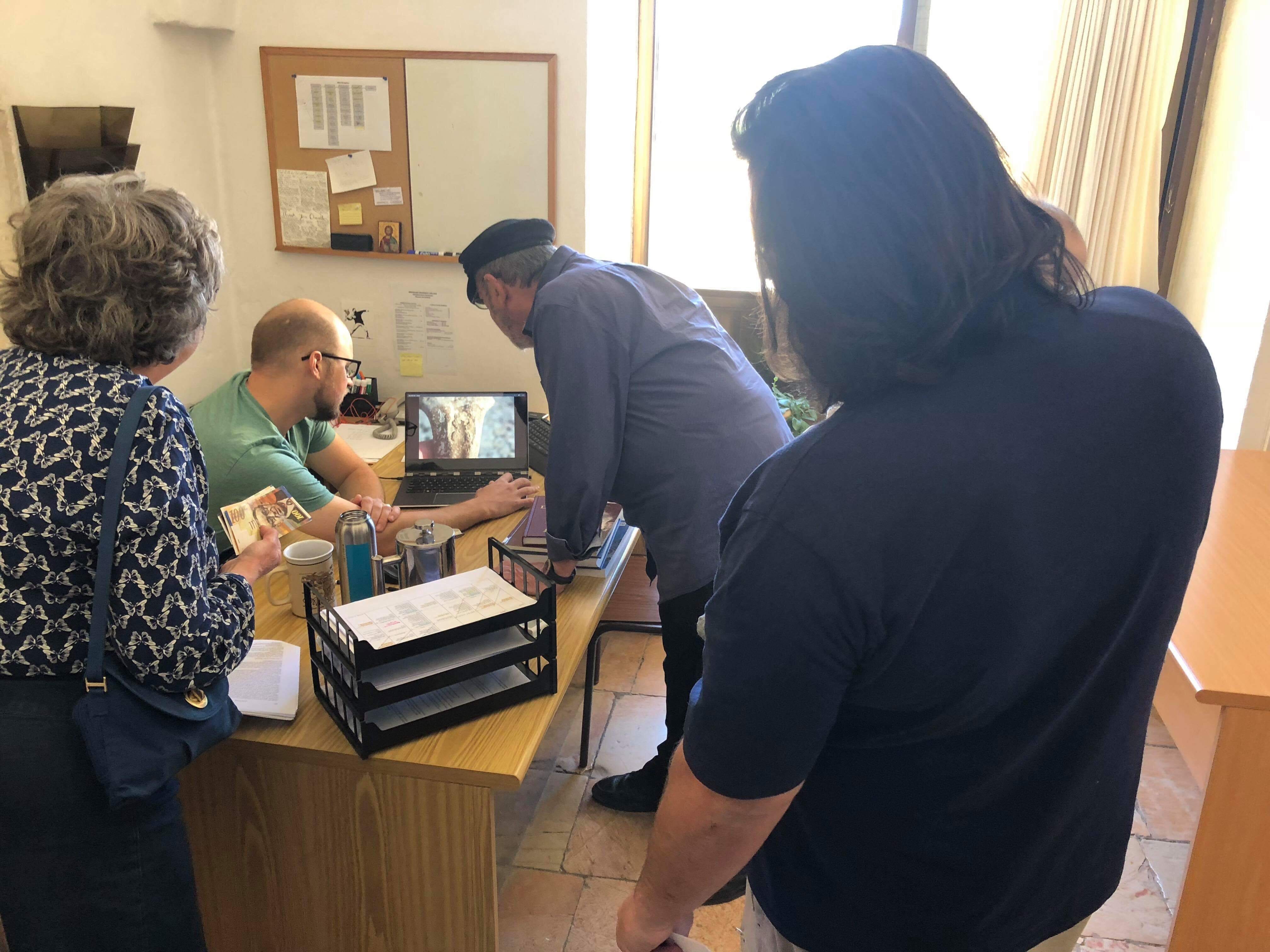
The real reward was sitting in the classroom and absorbing Gaby’s lectures, which were void of any visual presentation and given on the basis of his memory and a short stack of notecards he held in front of him. Occasionally, he would stand up to write names or draw objects on the whiteboard. At the opening of every lecture, he would ask if there were questions about any topic, whether relevant to the course or not. One class session, I asked him about the Garden Tomb, and he proceeded to share for the next 45 minutes. Extended Q&A meant that he never covered the full course content during any semester (or so I’ve been told). But it encouraged me to be seriously engaged, both in the library and the field, so I didn’t waste the opportunity to get his input about any issue that that might pique my curiosity. He was not as mobile as he had been during his younger days, but I was also able to experience some field excursions with him to places like the Ecole Biblique, Sanhedria, and the Third Wall.
While on staff at JUC several years later, I audited his Archaeology of Jerusalem course that covered the history of the city from the earliest times to the Byzantine Period over two semesters. The class introduced students not only to Jerusalem, but also to the wild excavation history of the city and many longstanding personalities, organizations, and issues that enrich and complicate its archaeological study.
One class session took place entirely in the library, where Gaby worked one by one through some 50 books on Jerusalem and told us what he thought of them. This is the background of the author, why the book was good or bad, and what important contributions it made to the history of Jerusalem. He introduced us broadly to the genres of literature on Jerusalem that have appeared since the 19th century and listed all the important journals where information on the city might be hiding. He encouraged us to read every book on Jerusalem that we could get our hands on in order to develop a fluency about the history of the city and because you never know what golden nuggets might be hiding in even the worst or strangest books.
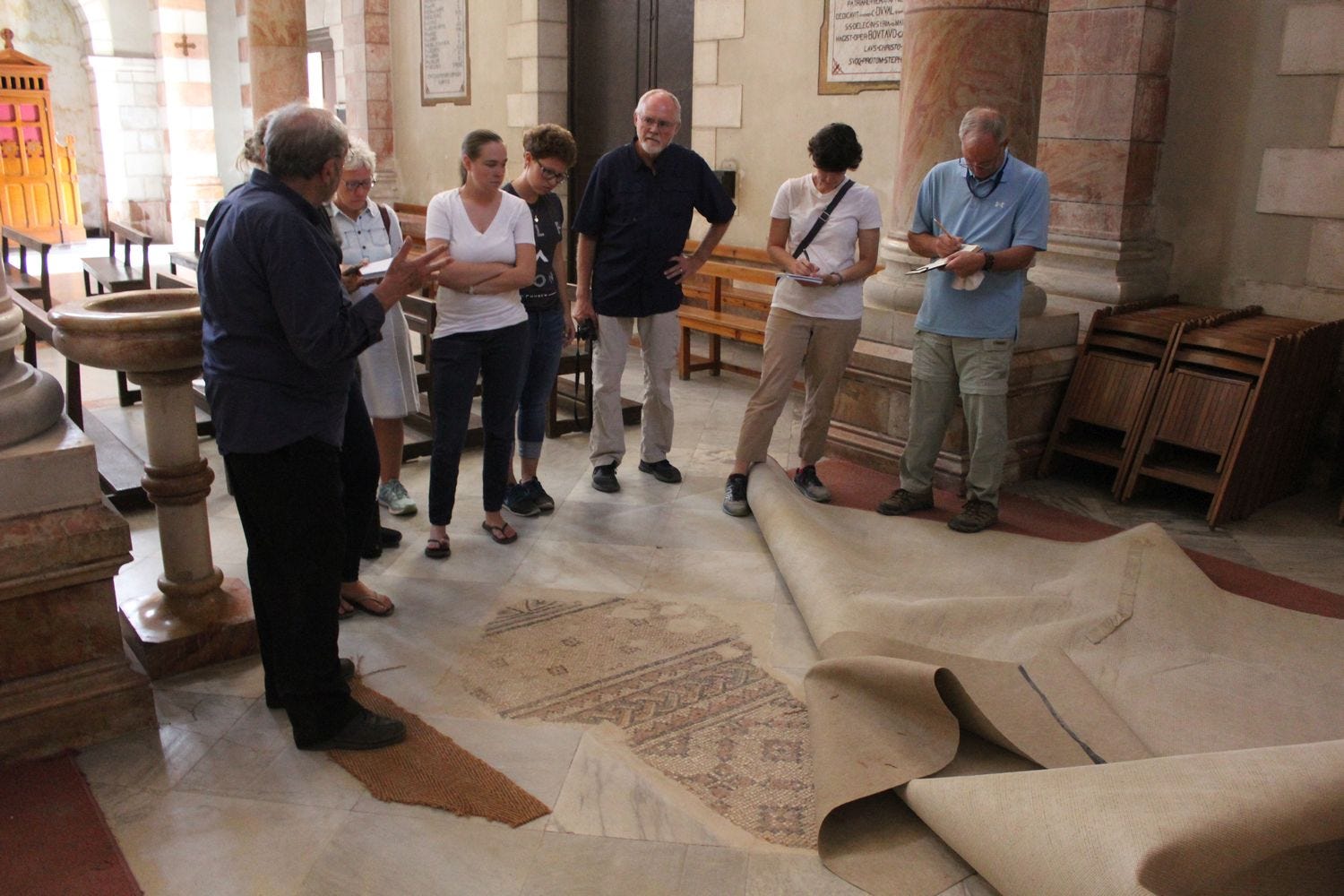
It is cliche to describe someone this way, but his knowledge of Jerusalem’s history was indeed encyclopedic, reaching back to the days of proto-scientific study by western explorers during the Ottoman Period. It was also personal, since he lived, studied, and excavated in the city for more than 70 years. For instance, one day he discussed Jason’s Tomb in class, a Hellenistic Period Jewish tomb that is tucked away in the West Jerusalem neighborhood of Rehavia. He described walking to school one morning in February 1956 when it had been exposed by dynamite blast. He decided to skip school so he could examine it. Gaby had studied with scholars such as Michael Avi-Yonah, who was the academic advisor for the famous model of 70 CE Jerusalem that I have written about in several posts.
Gaby’s approach was in many ways reflective of a bygone era, bringing an eclectic range of tools to bear on every topic, such as geography, field archaeology, ceramics, epigraphy, linguistics, biblical interpretation, and many others. He always said that there are no experts on Jerusalem, and I definitely believe him. But he must at least have set the bar and been among those few who, as is sometimes said, “knew every stone.”
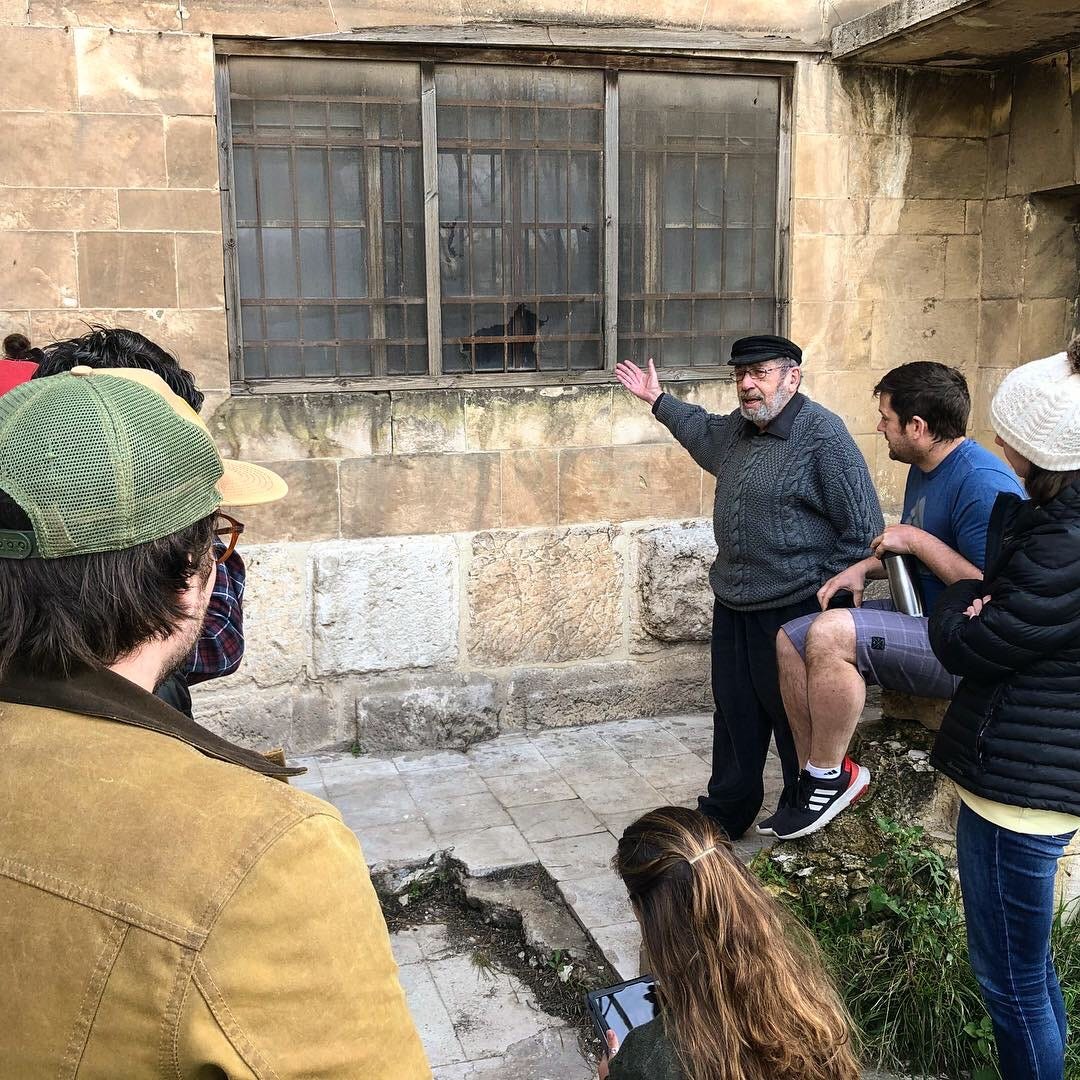
My last memories with Gaby were during the COVID era when I drove him to lectures at the Albright Institute. We would chat during the commute, and he often pointed out and discussed landmarks along the route. I can say with a high degree of confidence that I would not have pursued the research topics that have consumed me over the last 5-ish years without his influence, and especially his Jerusalem course and passion for the city’s history. Since incubating in the classroom, my views on Jerusalem have become differentiated from Gaby in some ways, but always with gratitude and appreciation for his investment in the city’s history and in me.
May his memory be a blessing.
Paid Supporters
March 17 (8:00-9:30pm ET): Approaching Jerusalem livestream for paid supporters
During these events, I discuss excavations, publications, pop media articles, and developments relevant to historical Jerusalem. I also share resources and occasionally present original research. Participants have the opportunity to ask questions. Paid subscribers also get access to the archive of previous livestreams, which is currently about 16 hours of watch time.
This material was 100% human composed. We do not use AI at any stage of research or writing.
Enjoy this post?
Show your appreciation by leaving a tip as low as the price of a cup of coffee. Less than 1% of readers do this, and it makes an enormous difference.
Follow Approaching Jerusalem
View the newsletter archive and follow Approaching Jerusalem on social media for archaeological stories, upcoming lectures, and other Jerusalem-related news, resources, and analysis.